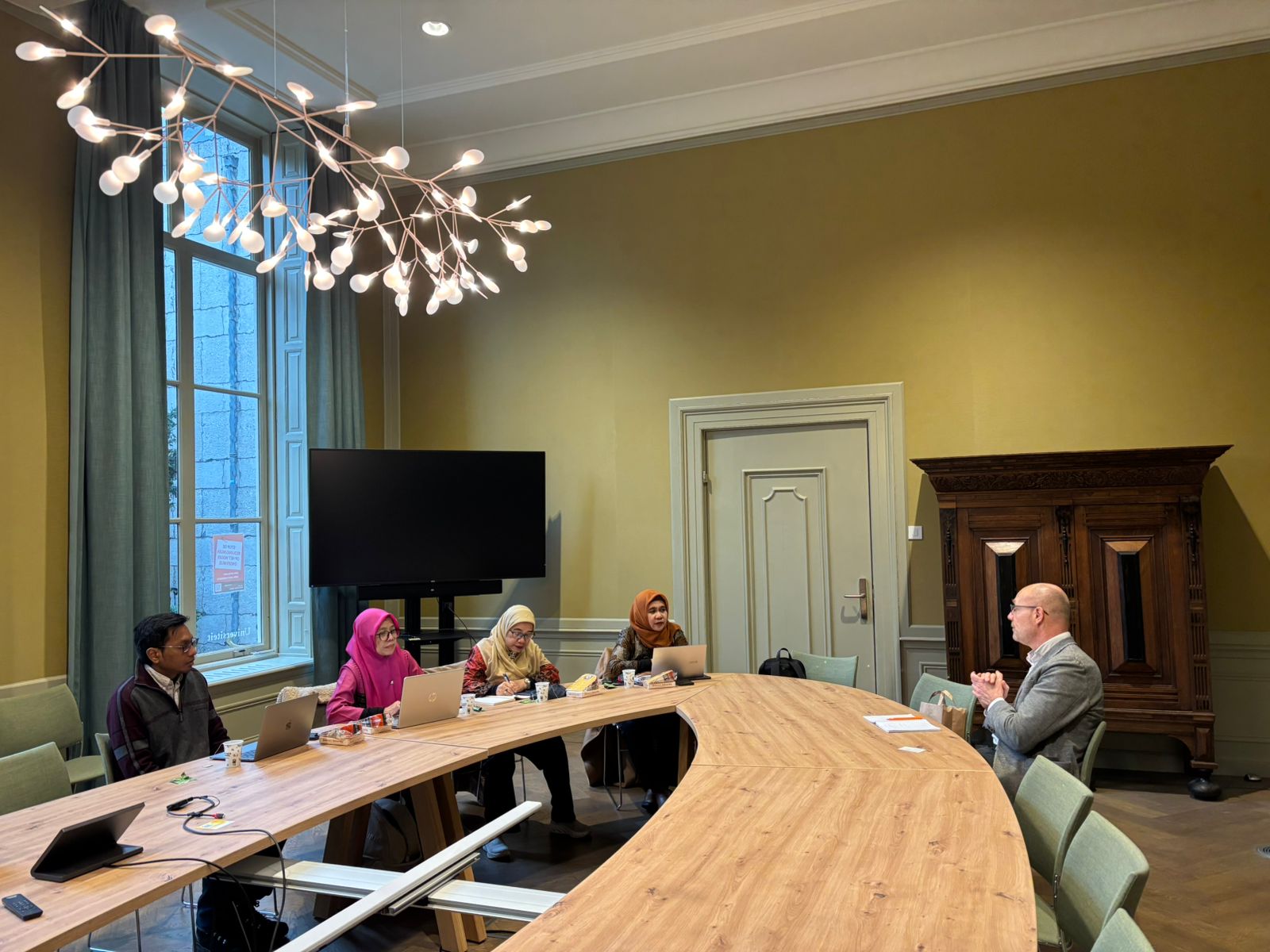
Pasqapro successfully organized and facilitated the Joint Research Discussion between Universitas Trisakti and Utrecht University, Netherlands, on 09-13 December 2024. The program, held to foster international collaboration and legal research excellence, brought together academic experts to explore contemporary legal issues, regulatory challenges, and comparative studies of European and Indonesian systems. Participants included notable representatives such as Tri Sulistyowati Sriyono, Arlina Permanasari, and Siti Nurbaiti Umar from Universitas Trisakti, as well as Drs. Caspar de Bok as Head of Educational Policy & Quality and International Affairs and Prof. mr. dr. Sybe de Vries from Utrecht University.
The discussions revolved around several key themes. The first theme, Business Law and the Civil Law Approach, focused on how civil law principles can be applied effectively in modern business contexts. This session highlighted the role of civil law in resolving contractual disputes, protecting business rights, and supporting commercial transactions, emphasizing its relevance in both European and Indonesian legal systems.
The second theme tackled the growing influence of Social Media Platforms, particularly TikTok, Facebook, Instagram, and Telegram. Researchers examined the impact of these platforms on society, including issues such as content regulation, disinformation, and user accountability. Special attention was given to how legal frameworks can address challenges posed by digital platforms in Indonesia and Europe.
In the session on EU Legislation as a Comparative Study, participants explored whether European Union regulations could be applied in Dutch courts and how such frameworks influence other jurisdictions. This theme underscored the complexity of cross-border regulations and their adaptability, offering valuable insights for Indonesian legal scholars seeking to adopt best practices from the EU.
Another significant discussion centered on Legal Systems in Europe, which combine civil law and common law traditions. The session explored how these systems coexist and complement one another, providing a unique perspective for Indonesian academics to compare and contrast with their own legal frameworks.
The Case Focus in Indonesia provided a closer look at specific legal issues surrounding TikTok in Indonesia. Researchers analyzed cases involving regulatory enforcement and content disputes, addressing the legal responsibilities of platform providers and the challenges of ensuring compliance with national laws.
The concept of Freedom of Expression was another critical focus, with discussions on the principles and limitations of free speech. Participants debated how laws balance individual rights and societal protection, particularly in the digital age, where platforms amplify voices but also create opportunities for harmful content.
The theme of Regulatory Differences emphasized the discrepancies between legal systems in the Netherlands and Indonesia, highlighting challenges in harmonizing regulations, especially in cases involving multinational platforms and businesses. This session aimed to inspire new ideas for improving regulatory mechanisms in Indonesia.
Participants also explored Legal Processes and Court Decisions, focusing on judicial procedures and outcomes in Europe and Indonesia. By examining notable court decisions, the session provided insights into how each jurisdiction addresses legal disputes, ensuring justice and consistency in enforcement.
A detailed analysis of the Judicial Review of Article 1365 of the Indonesian Civil Code served as a case study, showcasing the role of civil lawsuits in resolving disputes over losses and damages. This discussion emphasized the need for clarity in interpreting and applying legal principles to real-world cases.
Finally, participants debated the Definition of ‘Disinformation’ and who holds the authority to determine what constitutes disinformation. This session sparked thought-provoking discussions on content regulation, accountability, and the delicate balance between censorship and free expression in a democratic society.

Throughout the event, meaningful exchanges between researchers and faculty members facilitated new ideas for joint research initiatives, PhD opportunities, and visiting lecturer programs. Utrecht University reaffirmed its commitment to strengthening partnerships with Indonesian institutions like Universitas Trisakti to address global legal challenges collaboratively.
Pasqapro, as the event organizer, remains committed to supporting Indonesian universities in expanding their international reach and fostering world-class research excellence. By providing platforms for academic collaboration and dialogue, Pasqapro continues to bridge institutions and empower future legal scholars and professionals.
For more information about Pasqapro’s initiatives and future programs, please visit www.pasqapro.co.id


